
Securing technological independence in critical domains. Modern defence systems depend on physics-driven models (PDEs) that are computationally intensive and demand extreme accuracy.

H-DES is 100% developped in France and can solve your multiphysics problems.
Defence communication, detection, and stealth systems depend on large-scale Maxwell’s equations simulations. Using H-DES, QUICK enables fast and accurate resolution of EM field equations to optimize RCS and stealth performance.

Accelerated radar signature analysis and RCS studies.

Optimized materials and geometries for stealth design.

Realistic multi-band electromagnetic simulation for mission-critical systems.
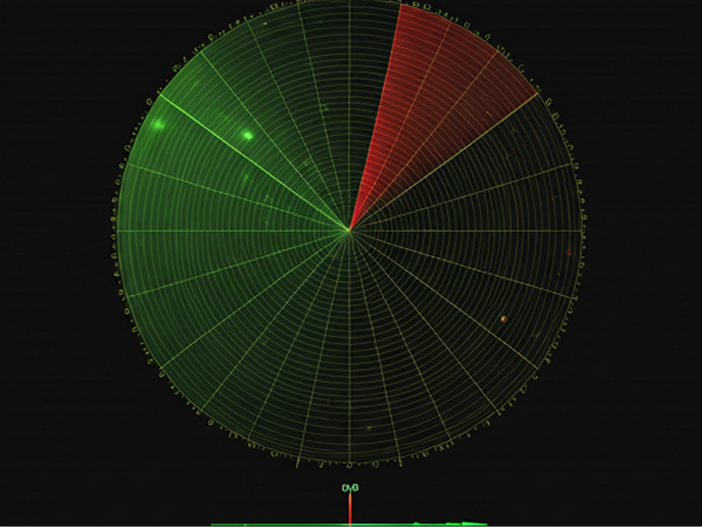
Simulating impact or detonation involving non-linear, multi-physics PDEs. Traditional solvers struggle with precision under extreme transient conditions. QUICK efficiently handles these complex coupled models at large scales.

Improved ballistic and penetration model accuracy.

Reduce need for costly and time-intensive physical trials.

Enhanced material design and behavior modeling under extreme constraints.

Understanding wave propagation (acoustic, seismic, EM) through complex media. QUICK simulates coupled wave equations, accounting for turbulence, diffraction, and scattering.


Join the front line of computational sovereignty. Our experts are ready to integrate QUICK into your strategic operations.
CONTACT OUR TEAMQuantum computing is explored for several computational challenges that appear in defense research and advanced engineering systems. Many defense technologies rely on large scale simulations based on complex physical models.
ColibriTD focuses on applications where scientific computing and multiphysics simulations play a critical role.
Examples of relevant defense use cases include:
For many defense organizations and public institutions, technological sovereignty is an important consideration when adopting advanced computing technologies.
Quantum computing infrastructures, algorithms, and software platforms are often developed and controlled by international technology providers. For organizations working on sensitive programs, access to trusted and locally developed technologies can be an important requirement.
ColibriTD develops its quantum software technologies in France. Key components of the stack, including the Hybrid Differential Equation Solver (H-DES), a hybrid algorithm and the Multi-Platform Quantum Programming (MPQP) programming library, are designed and developed by the ColibriTD research team.
This provides defense institutions and strategic industries with access to a quantum software solution developed in Europe and fully controlled at the algorithmic level.
Because the ColibriTD stack is hardware agnostic, organizations can also experiment with different quantum infrastructures while keeping control over the software layer used to design and execute their algorithms.