
A world-class team of physicists, computer scientists, and technology leaders united by a single mission: to democratize quantum simulation for industry.
ORIGINS
We are a quantum computing company based in Paris with a strong scientific team consisting of experts in physics, computer science and technology.
Our goal is to conduct R&D to understand your needs as a client and create innovative software based on our cutting-edge research. We are passionate about bringing access to quantum to everyone and transforming the science and business landscape.
Driving the strategic vision and industrial integration of quantum solutions.
.jpg)
Dr. Laurent Guiraud co-founded ColibriTD in 2019 with the objective of preparing companies for the second quantum revolution by building an R&D pole in quantum algorithmic research. He holds a doctorate in atomic physics obtained in 1996 and has more than 25 years of experience with the world’s largest IT players with a focus in cloud computing and big data. He’s also the winner of the Google Innovation Award.
.jpg)
Hacène, passionate about ecology, with a successful career in business development and corporate social responsibility, he co-founded ColibriTD with Dr. Laurent Guiraud back in 2019. He oversees strategy, finance and business development.
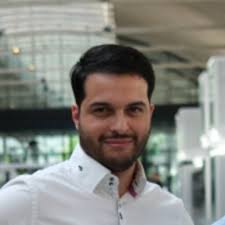
Dr. Hamza Jaffali was the first employee to join ColibriTD, he then took the lead of the R&D team and is now the CTO of ColibriTD. He has always had a passion for mathematics and computer science and completed his studies in computer engineering. After this, he continued his academic path to doctoral studies, and wrote his thesis on quantum information theory and quantum entanglement. This gave him the opportunity to explore various new subjects, including machine learning, algebraic geometry and numerical optimization. At ColibriTD, he combines his expertise in quantum computing and other fields for developing innovative products and solutions.
Guiding our R&D with world-renowned expertise in quantum physics and computational mathematics.
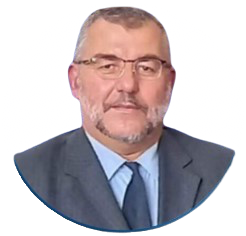
Full Professor at ENSTA Paris (Institut Polytechnique de Paris) and Head of Systems Engineering activities within U2IS. His work focuses on complex systems engineering, embedded and multicore architectures, and multi-physics system design, with applications spanning defense, robotics, and large-scale industrial systems.
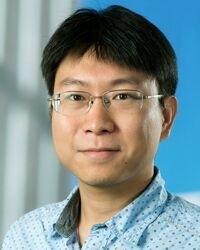
Assistant Professor of Computer Science at Leiden University, with a background including a PhD (cum laude) from Leiden and a postdoc at Sorbonne University. His research focuses on Bayesian and multi-objective optimization, variational quantum algorithms, evolutionary computation, and benchmarking.

CNRS Research Director at Université de Toulouse, working on quantum information theory, random matrix theory, and their mathematical foundations.
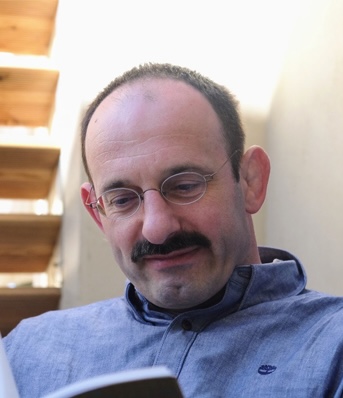
Professor at Université Bourgogne Europe (UBE), specializing in mathematical physics, integrable systems, and advanced numerical methods for nonlinear partial differential equations and scientific computing.
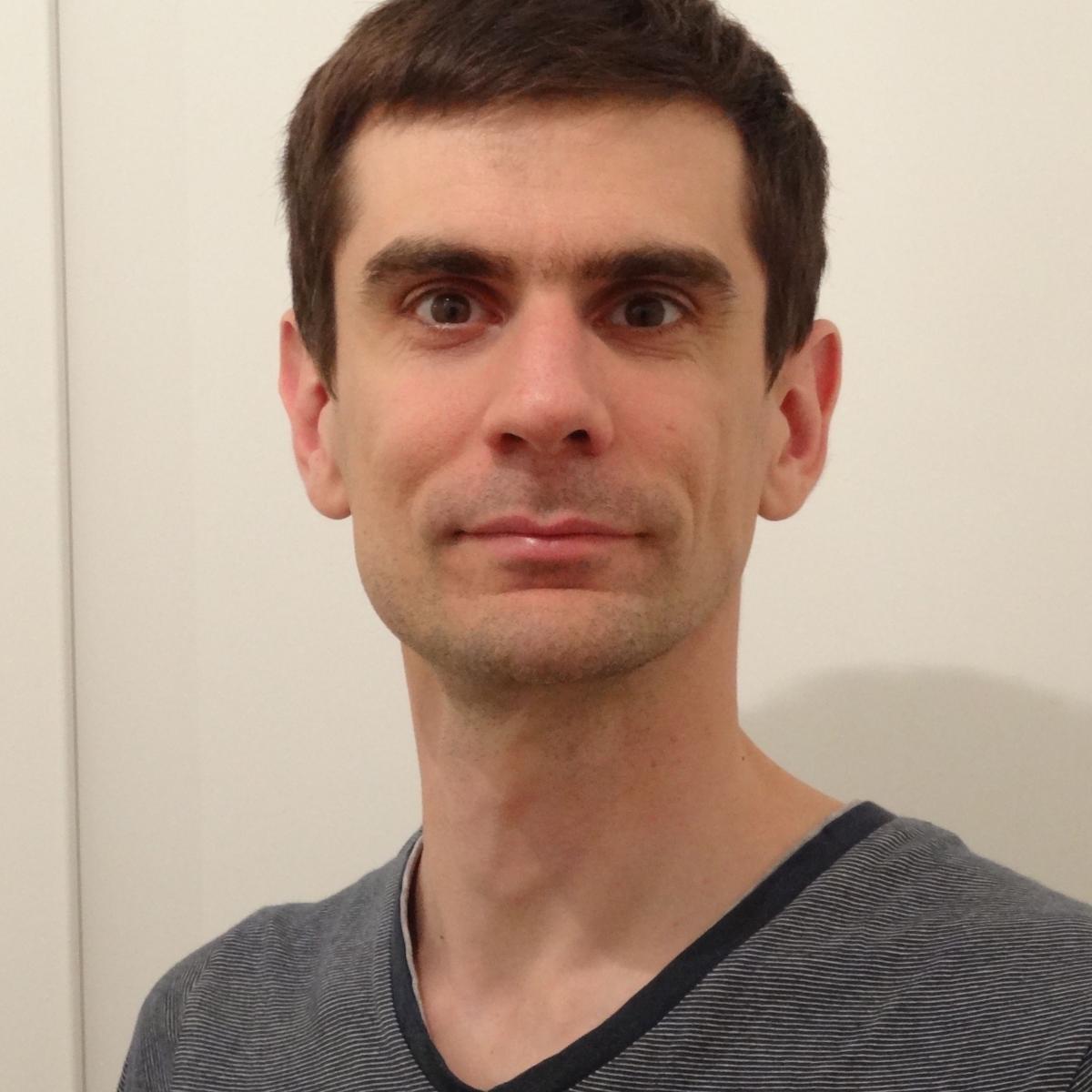
Senior Researcher at Inria and leader of the MOCQUA team at LORIA, specializing in quantum computing, quantum algorithms, ZX-calculus, and formal methods for quantum programming and verification.
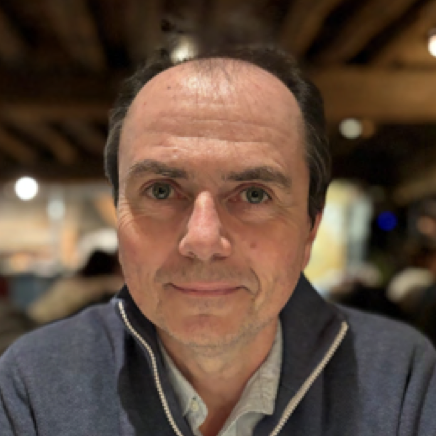
Professor at Université Bourgogne Europe (UBE) and Director of the Interdisciplinary Carnot de Bourgogne (ICB) Laboratory, specializing in quantum control, light–matter interactions, quantum technologies, and photonics.
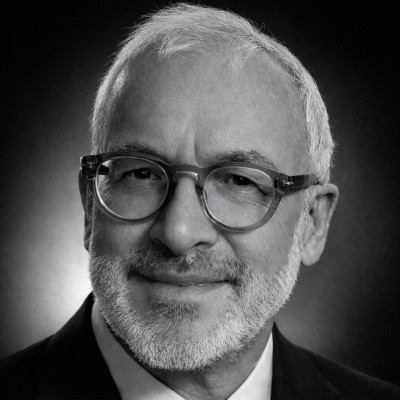
EX. CTO - Ansys Europe

Inventor, Entrepreneur & pioneer in advanced technologies
A quantum computing startup brings together several types of technical profiles.
At ColibriTD, the core team is structured around three main roles:
This mix allows the company to connect advanced research with real industrial applications and deliver usable software solutions.
Working on quantum algorithms requires strong scientific and technical skills.
For research roles, ColibriTD mainly recruits PhDs in physics, computer science, mathematics, or related fields with a focus on quantum computing
These profiles work on algorithm design, hybrid methods, and mathematical modeling.
For software and IT roles, ColibriTD looks for engineers with a master’s degree in computer science, ideally with a specialization in quantum computing.
These profiles focus on building robust software, integrating algorithms, and developing tools that can be used in real environments.